NICOLAS RUSSO
DEV PORTFOLIO
Audio Software Engineer
Made with HTML, CSS, and JS
Audio Software Engineer
Audio Software, Apps, and Games
Smart Clip is a plugin developed in JUCE using C++ that uses multiband limiting and clipping to create high-end preserving distortion. 4/27 was also made using JUCE, and uses an exponential equation and waveshaping techniques to create a smooth analog-sounding distortion. Deep Pan was made in Max4Live, and uses mid-side delays to create a deep panning effect to replace standard LCR mixes.
The AI Language game uses Google Cloud's Speech-to-Text API to capture a user's sentence, sends it to a Large Language Model (Llama3.1) for translation, and plays the translated sentence via Google's Text-to-Speech API and PyGame. The ChatBot works similarly but uses a character description for its context instead of translation instructions.
This game takes a MIDI file as input, and builds a chart for the rhythm game component using the MIDI note data in real-time. Charts can thus be created and edited extremely quickly. Additionally, note data is also used to control the video effects such as screen shakes and drifts.
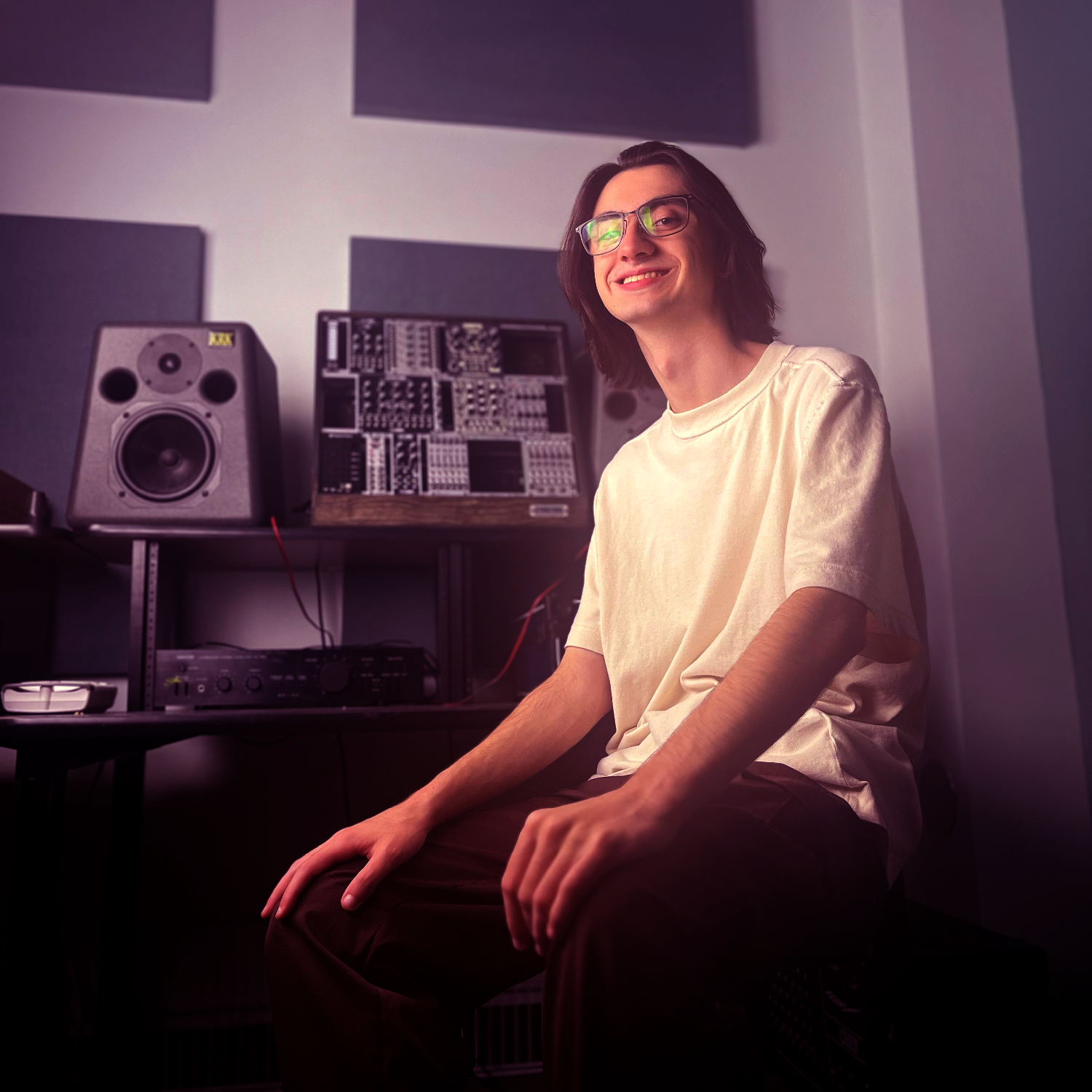
Nicolas Russo is an independent artist as well as an audio and sofware engineer. He currently attends the University of Miami in Florida, pursuing a Bachelor's and Master's degree in Music Engineering Technology with a minor in Computer Engineering. In his time at the university, Nicolas has recorded several groups in multiple studios, including the one-of-a-kind Weeks Recording Studio.
His musical background in piano, electronic instrumental performance, and both contemporary and jazz drumset has provided him with a wide range of interests and talents. He also creates heavy electronic dance music under the name Omnicorum, where he has released over 46 songs on multiple record labels.
Nicolas has a passion for computer science, engineering, and programming. In addition to a multitude of various independent projects he has completed, Nicolas has also worked as a Teacher's Assistant for the Intro to Programming class at the University of Miami. There, he taught a weekly lab section, where he kept students on task, answered questions, and provided guidance where needed. He also graded and provided feedback to students' lab work, as well as facilitated one-on-one and group tutoring sessions.
 Code
Code